Backyard Basketball Courts That Hold Up on Kansas Clay
Concrete Sport Pads Built Right Across Wichita and Kansas City
A backyard basketball court is one of the biggest flat slabs most homes will ever have — and on Kansas clay, big and flat is exactly where things go wrong. The soil swells when it's wet and shrinks when it's dry, and a court built on a base that wasn't prepped for that will telegraph every heave as a lip, a low spot, or a crack right through the key. The good news: a court is just concrete, and concrete done right lasts decades. Here's what separates a pad you'll play on for twenty years from one that puddles and cracks by its second winter.
COURT CONCRETE: THE SHORT VERSION
• A sport court lives or dies on base prep — compacted subgrade and aggregate come before any concrete.
• A raised control joint will catch a dribble, so joint layout and finish matter more here than on a patio.
• Pour it flat with just enough slope to drain, reinforce it, and seal it against Kansas freeze-thaw.
THE BASE MATTERS MORE THAN THE SLAB
A sport court is only as flat as the ground under it, so the base is the whole job. On Kansas clay we strip the topsoil, compact the subgrade, and build up a compacted aggregate base that gives the slab a stable, draining platform instead of letting it ride directly on soil that moves with every rain. Skip that and the prettiest finish in the world still heaves.
• Expansive clay moves seasonally — a compacted aggregate base absorbs that movement.
• A standard residential court slab runs around 4 inches, reinforced with rebar or wire mesh.
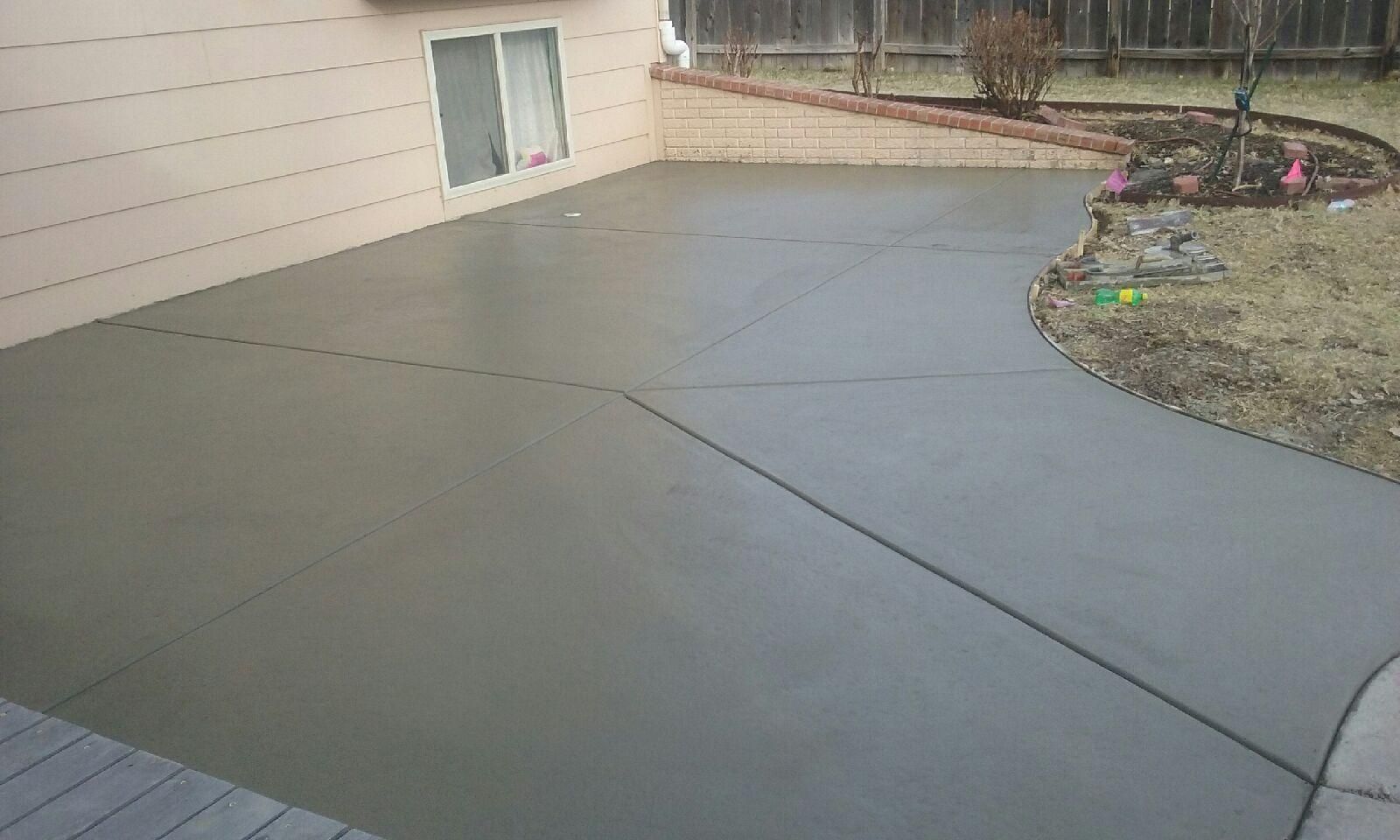
• The pad needs a slight slope to shed water without hurting play — flat enough to dribble, pitched enough to drain.
📐 PLAN YOUR COURT BEFORE YOU POUR
Nail these down first:
• Size: a half-court game fits a smaller pad; a true key and three-point arc need more room.
• Drainage: know which way water will run off the pad and where it goes.
• Surface: bare broom-finished concrete, or a coated acrylic sport surface laid over the slab later.
Measuring your backyard for a court? Get a free estimate and we'll tell you honestly what fits and what it'll take: 316-945-3232 in Wichita, 913-453-3232 in Kansas City.
JOINTS, FINISH, AND KEEPING IT CRACK-FREE
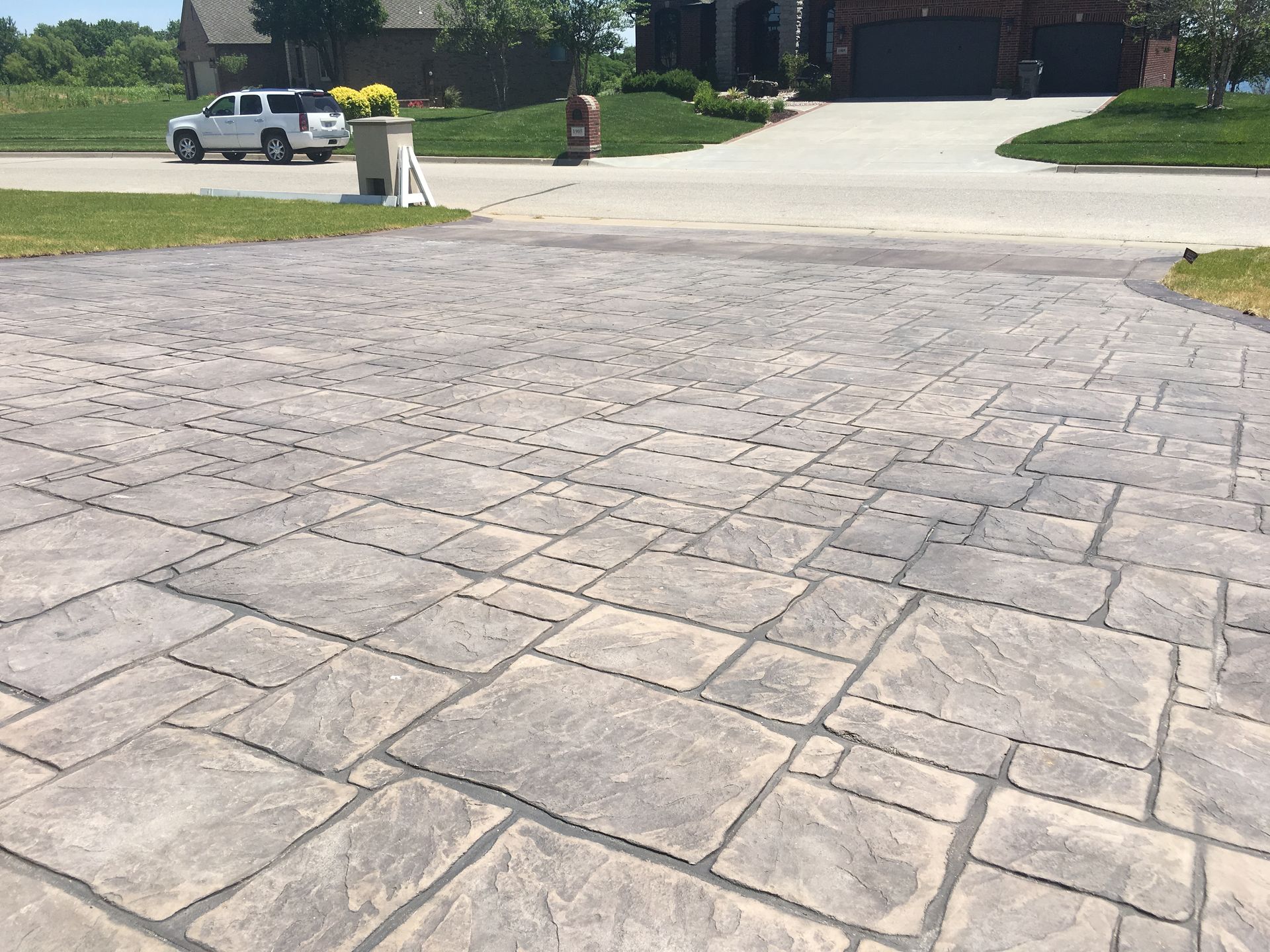
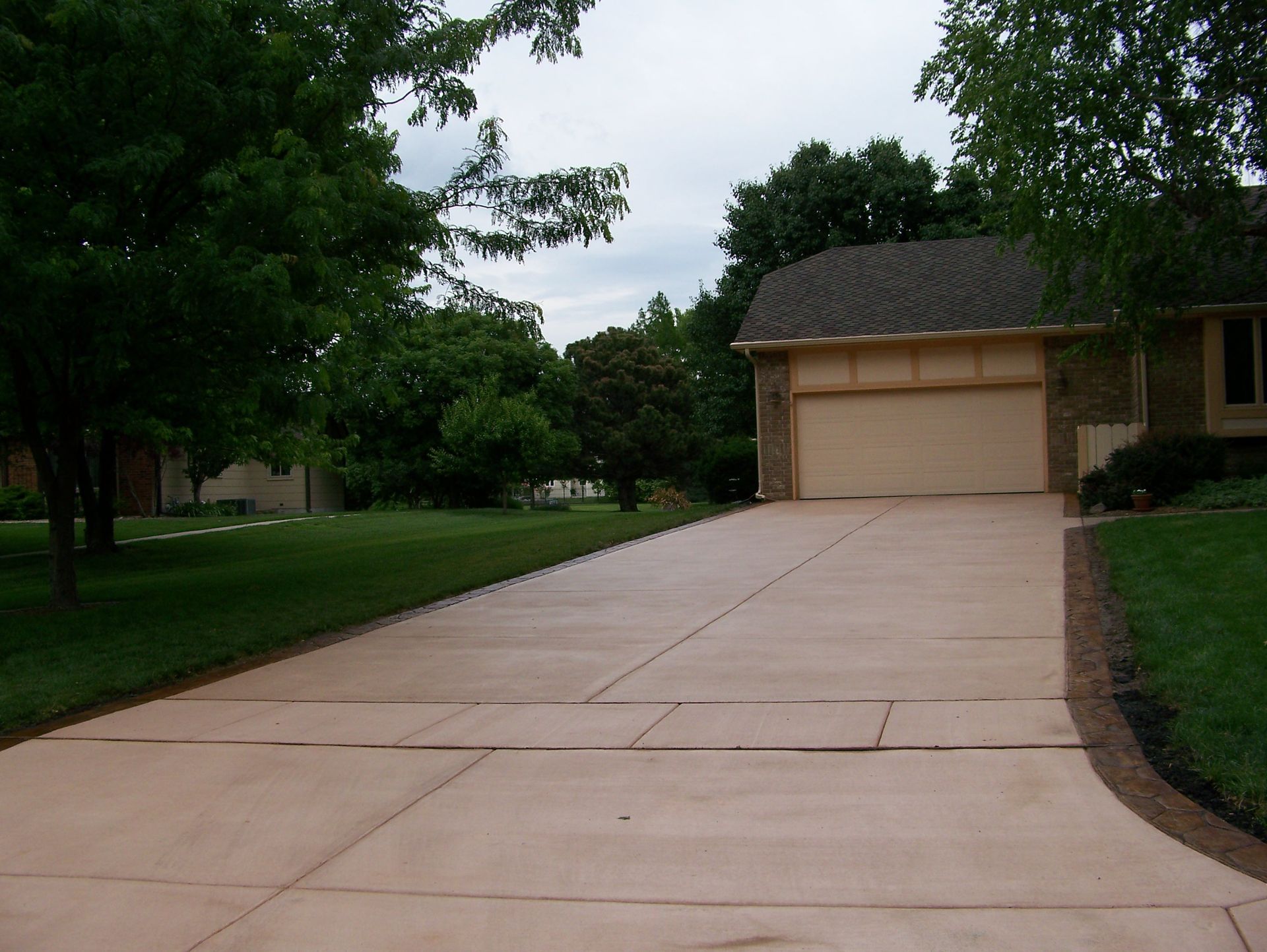
On a court, the control joints are part of the playing surface, so we plan them instead of just cutting them in wherever. A joint with a raised edge grabs a bounced ball, so we lay out joint spacing to control cracking while keeping the pattern clean and the edges tight. We broom the surface for grip — a glass-smooth court is slick when it's damp — and air-entrain the mix so it has room to handle freeze-thaw. Seal it, and the slab shrugs off the water that wrecks unsealed concrete every Kansas winter.
• Control joints are placed to manage cracking, not catch a dribble.
• A medium broom finish gives traction; a troweled-smooth court gets slippery.
• Sealing and an air-entrained mix are what carry a court through freeze-thaw.
📐 PROTECT YOUR COURT SEASON TO SEASON
Keep a finished court playing like new:
• Reseal on the schedule we set — it's cheap insurance against scaling.
• Keep de-icing salt off it, especially the first winter; use sand for traction.
• Clear standing water and leaves so nothing sits and stains the surface.
Thinking about it for next season? Winter is the right time to plan and book a spring pour, before the calendar fills. Ask about 10% off for Facebook followers, up to $500.
🔧 FROM THE FIELD
The court problem we get called about most isn't a crack — it's a bad bounce. A slab poured without planned joints ends up with a raised joint edge or a low spot that sends the ball sideways, and by then it's set and there's no fixing it cheap. That's why we treat a court like a precision slab, not a big patio: we dial in the base so Kansas clay can't lift one corner, we lay out joints so the pattern works with the game instead of against it, and we keep the finish consistent edge to edge. The pour is a few hours; the prep and the layout are what you're actually paying for, and they're what you'll notice every time the ball hits the deck.
THE BOTTOM LINE ON BACKYARD COURTS
A backyard court that stays flat, drains clean, and plays true comes down to the base and the joint layout — not the hoop you bolt on at the end. Build it on prepped, compacted ground, reinforce and seal the slab, and plan the joints around the game, and you've got a court that outlasts the kids who wear it out. Cut corners on the prep and Kansas clay will find them.
P.S. Dreaming about a court for spring? Plan it now and you're first in line when the ground's ready. Free estimates: 316-945-3232 (Wichita) or 913-453-3232 (Kansas City), or office@bnbbuilders.com.
Written by Stan Stiverson, owner of B & B Builders Inc. — concrete, masonry, decks, and outdoor living built by our own in-house crews across Wichita, Kansas City, and surrounding communities. Free estimates: 316-945-3232 (Wichita) or 913-453-3232 (Kansas City).
Last reviewed: November 2026
Share this article: