Running Out of Driveway? Widen It the Right Way
How to Add Parking, RV, and Boat Pads That Tie In and Last
Two cars, a work truck, and a boat — and a driveway built for one. Plenty of Wichita homes have outgrown their parking, and the fix sounds simple: pour more concrete beside what's there. On Kansas clay, that's where it goes wrong. Pour it wrong and the new slab heaves, cracks from the old one, and drains right at your garage.
QUICK ANSWER ON WIDENING YOUR DRIVEWAY
• A parking pad needs its own base and real thickness — not a slab stretched over bare clay.
• New concrete should meet old at a joint that lets both move on their own, not a rigid seam.
• Slope it so water runs to the yard, not back at your foundation.
A WIDER DRIVEWAY NEEDS A REAL PLAN
A parking addition is a new slab — same base, thickness, and drainage as any driveway.
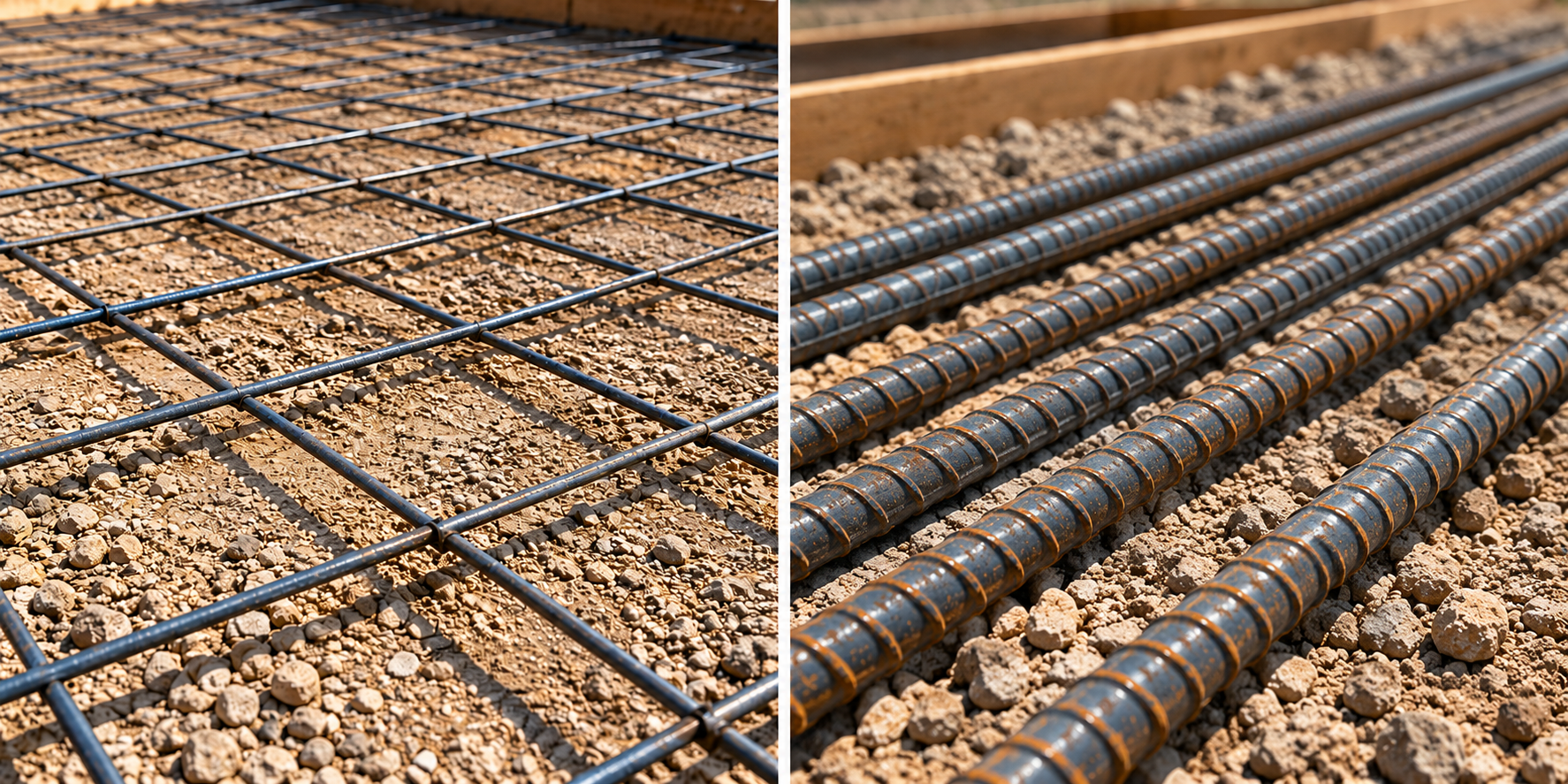
• Base over clay. Kansas clay swells and shrinks with moisture, so we compact the ground and lay a granular base before pouring.
• Thickness for the load. A car pad and an RV or boat-trailer pad aren't the same slab — heavier loads need more thickness and steel.
• Drainage. More square footage means more runoff, so the slope has to send it away from the house.
📐 MEASURE AND MARK BEFORE YOU CALL
Walk the space with a tape and spray paint. Mark how wide you need it, what you'll park there, and where water runs after a hard Kansas rain. That's most of what we need to quote it.
Not sure how thick your pad should be? — Call and we'll spec the thickness and reinforcement for your vehicles.
TYING NEW CONCRETE TO YOUR OLD SLAB
New concrete should never be butted tight against an old slab and left to fight it. They pour at different times on different soil and move at different rates — lock them together and the seam cracks or one side lifts. Usually the fix is an isolation joint, so each slab moves on its own; when load must cross the seam, we drill and epoxy dowels into the old slab. Matching the finish and broom direction keeps it from looking tacked on.
📐 CHECK YOUR EXISTING SLAB FIRST
Look hard at the driveway you have. If it's cracked, sunken, or spalling, tying fresh concrete to a failing slab just spreads the problem. Sometimes the honest move is to replace a section first — we'll tell you straight.
Worried about drainage at the tie-in? — See how proper grading protects Kansas slabs, or book a free on-site look.
🔧 FROM THE FIELD
On a Wichita widening, the seam between old and new is where it lives or dies. We cut a clean edge on the existing slab, set an isolation joint, and dowel across only when the load calls for it. Car pads go down at four inches; RVs, loaded trailers, or a dually get five or six over a compacted base. Control joints get cut every eight to twelve feet so the slab cracks where we want, and the pad slopes about a quarter inch per foot away from the foundation. On Kansas clay, base and slope matter more than anything you see once it's done.
MORE PARKING, DONE RIGHT THE FIRST TIME
A driveway widening is only as good as the base under it and the joint tying it to the old slab. Get those right and it stays level for years — and B & B Builders handles every step of your concrete work in-house, from tear-out to final finish.
P.S. — Winter is the time to get on the spring pour schedule. Call 316-945-3232 (Wichita) or 913-453-3232 (Kansas City) for a free estimate, and ask about Lyon Financial financing if you'd rather spread the cost.
Written by Stan Stiverson, owner of B & B Builders Inc. — concrete, masonry, decks, and outdoor living built by our own in-house crews across Wichita, Kansas City, and surrounding communities. Free estimates: 316-945-3232 (Wichita) or 913-453-3232 (Kansas City).
Last reviewed: October 2026
Share this article: