Rebar or Wire Mesh: What Your Kansas Concrete Needs
How We Reinforce Driveways and Slabs That Last on Kansas Clay
Concrete handles weight pressing down, but it pulls apart easily — and pulling apart is exactly what Kansas clay does to a slab. Our soil swells when it's wet and shrinks when it dries out, so your driveway gets tugged from underneath all year. Reinforcement decides whether that movement shows up as a hairline you'll never notice or a crack you can put a finger in. Here's how to pick right.
WHAT TO KNOW BEFORE YOU POUR
• Mesh controls shrinkage cracks on light slabs; rebar carries real load on moving clay.
• Vehicles, slopes, and fresh backfill call for rebar, not mesh.
• Steel only works when it's lifted into the slab — flat on the dirt, it does nothing.
WHAT REBAR AND MESH ACTUALLY DO
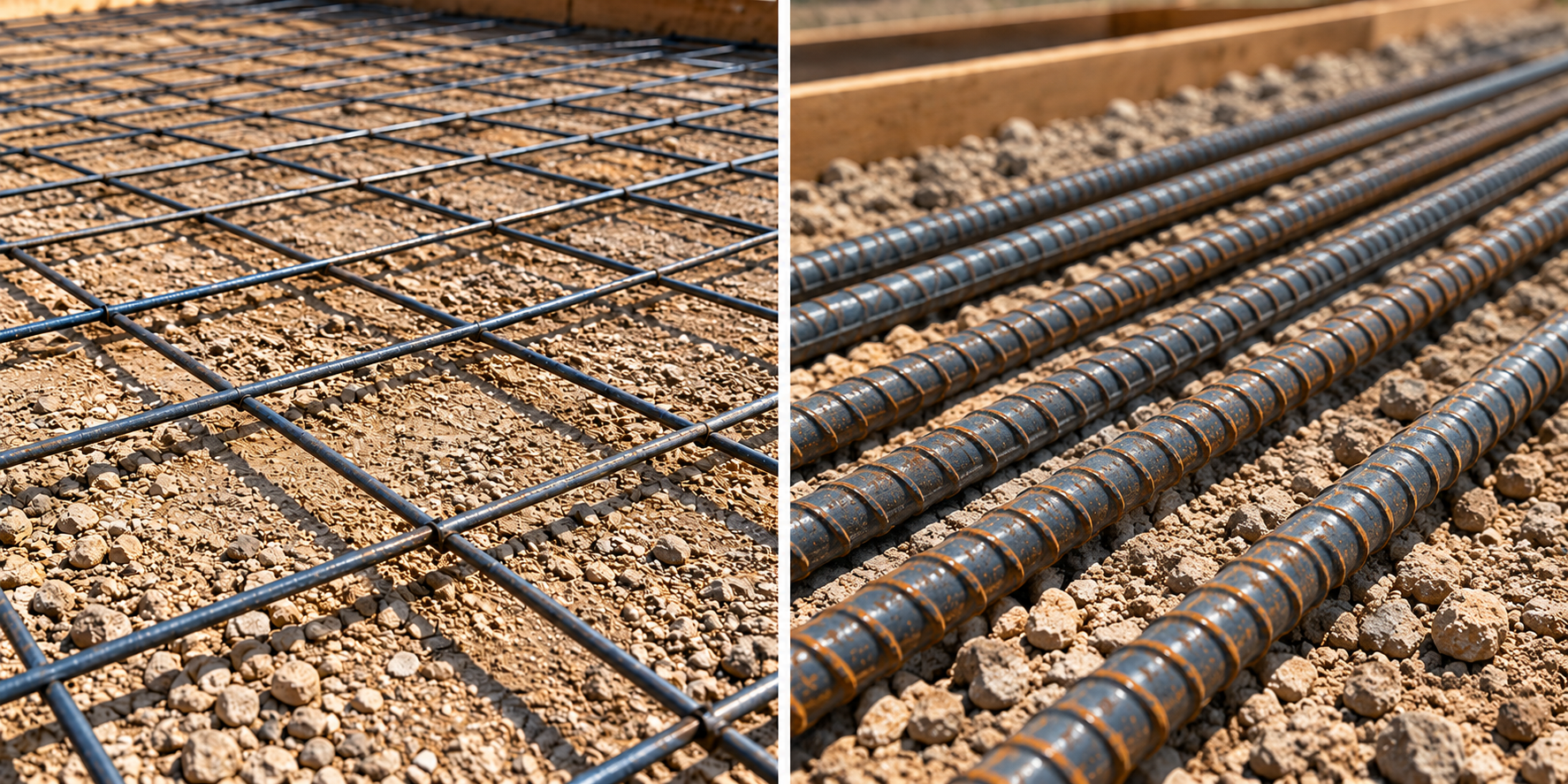
Rebar and wire mesh do two different jobs, and that's the whole decision. Mesh is thin steel in a grid that holds shrinkage cracks tight while the concrete cures. Rebar is thicker steel that ties the slab together and carries real load across soil that's moving.
• Wire mesh: crack control for lighter slabs — patios, sidewalks, small pads.
• Rebar: structural strength for anything carrying vehicles or sitting on active clay.
• Fiber in the mix: helps with surface cracking, but it never replaces steel.
📐 QUICK START: MATCH STEEL TO THE JOB
Walk your project and ask: what rolls or sits on it? Foot traffic and a patio table lean toward mesh. A truck, an RV, or a trailer means rebar — and so does anything on a slope or over fresh backfill.
Not sure which your slab takes? Send a photo and the dimensions and we'll tell you straight, free: 316-945-3232 (Wichita) or 913-453-3232 (Kansas City).
WHY PLACEMENT BEATS THE PART
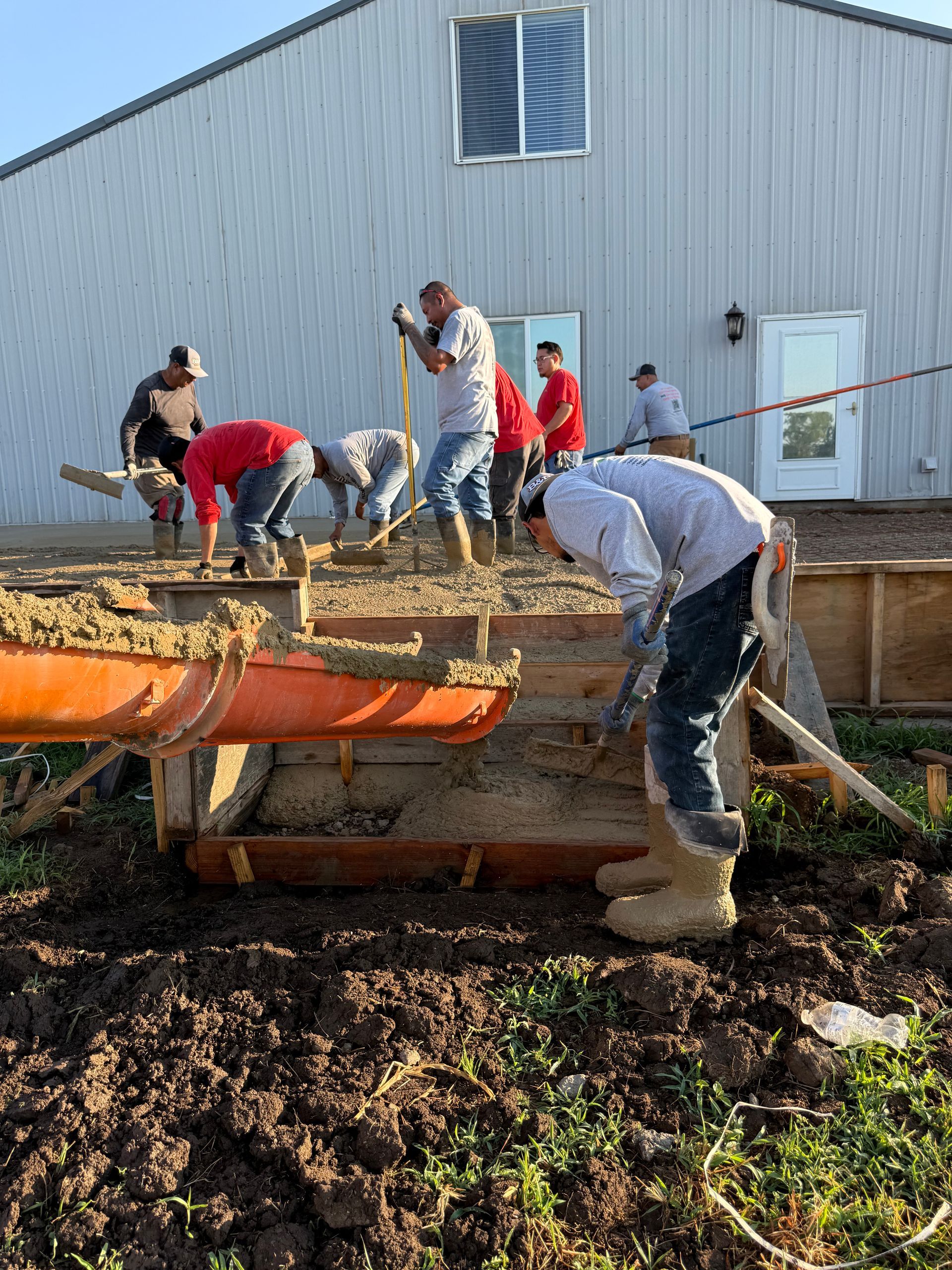
Steel in the wrong spot does nothing, no matter which kind you bought. It only works when it sits up inside the slab, in the upper-middle third, where concrete tries to pull apart. That's where cheap jobs fail. On a standard driveway we pour at least four inches, run a rebar grid, and set it on chairs so it holds height during the pour.
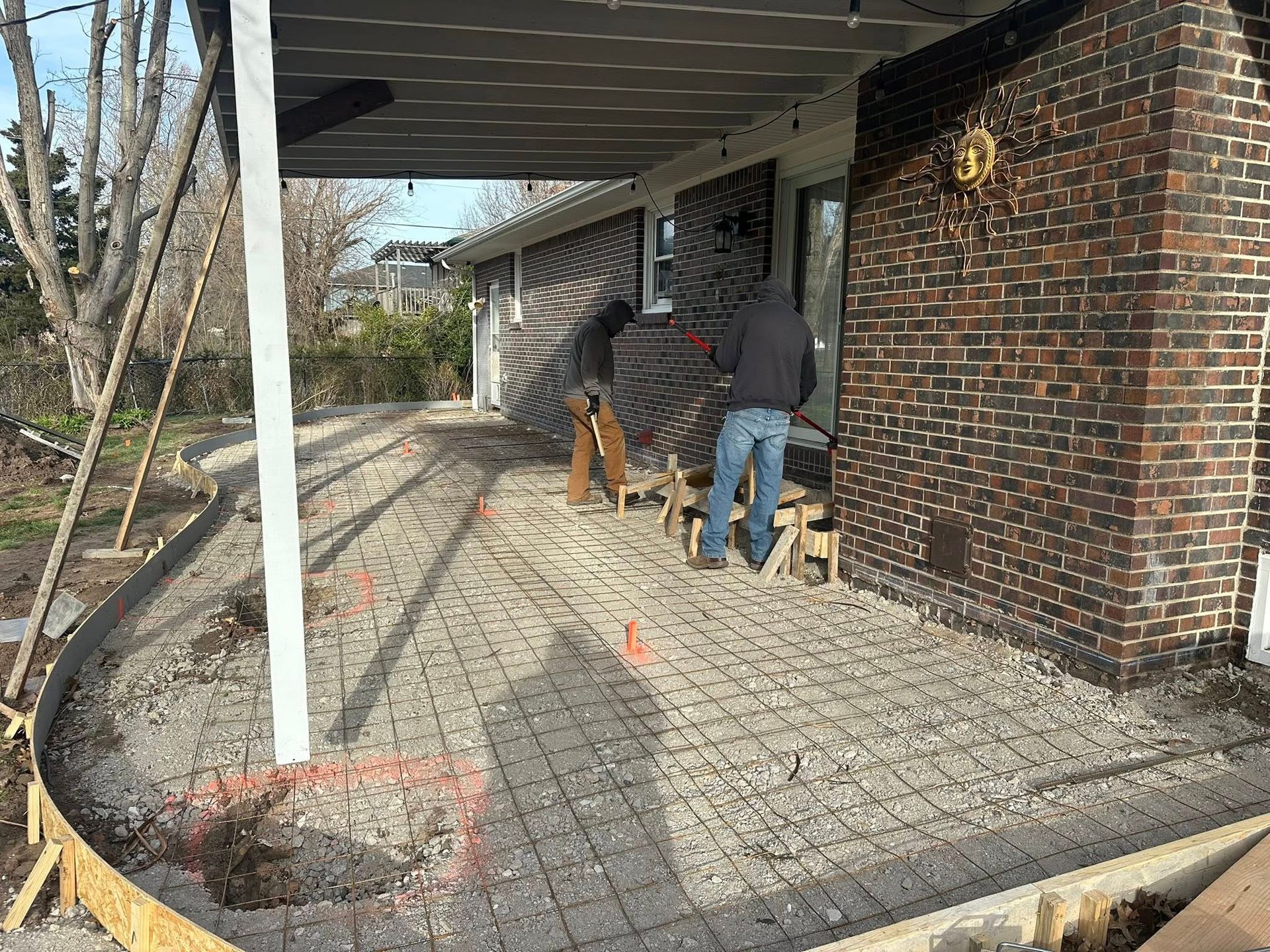
• Steel laid flat on the dirt and left there does almost nothing.
• We tie our grid onto chairs — no "hook and pull" mid-pour.
• Heavy loads get heavier steel, not just more concrete.
📐 QUICK START: INSPECT BEFORE THEY POUR
Before any crew pours, look down. The steel should be tied in a grid and lifted off the ground on little supports, not lying on the gravel. If it's flat on the subgrade, stop and ask how they plan to raise it.
Getting bids right now? Ask every contractor how they position their steel, then call us for a free second opinion.
🔧 FROM THE FIELD
The callback we get most on failed slabs isn't cheap concrete — it's wire mesh left flat on the subgrade and poured right over, doing nothing. We see it on tear-outs across the Wichita area constantly. Our crews tie rebar into a grid and set it on chairs so it cures locked inside the slab, because our clay moves enough that a driveway needs steel actually carrying it across that movement. We also thicken the edges, where vehicle weight and freeze-thaw do the most damage. Our own in-house crew does that prep, so it's right before a single yard shows up.
THE BOTTOM LINE ON REINFORCEMENT
Match the steel to the load, and make sure whoever pours it lifts that steel into the slab. On Kansas clay, that one detail is the difference between a driveway that holds for decades and one that's cracking in a few winters.
P.S. — Pour it once, pour it right. B & B Builders handles concrete, masonry, decks, and outdoor living in-house across Wichita, Kansas City, and surrounding communities. Free estimates: 316-945-3232 or office@bnbbuilders.com.
Share this article: