Concrete vs. Asphalt Driveways: Which Wins in Kansas
A Straight Comparison on Cost, Lifespan, and Kansas Freeze-Thaw
Trying to decide between a concrete or asphalt driveway before the ground freezes? Both work in Kansas, but they age very differently under our clay soil and freeze-thaw swings. Asphalt wins on upfront cost; concrete wins on how long it lasts and how little it asks of you. Here's the honest trade-off so you can pick the one that fits your house and your budget.
THE SHORT ANSWER FOR KANSAS HOMES
Asphalt costs less to install but needs resealing every few years.
Concrete costs more upfront and typically lasts decades with little upkeep.
Kansas clay and freeze-thaw are what decide which one holds.
HOW THE TWO MATERIALS STACK UP
Concrete costs more to install but far less to own over time. Here's how they compare on the things that actually matter to a homeowner:
Upfront cost: asphalt is cheaper to lay; concrete runs higher per square foot.
Lifespan: a well-built concrete drive commonly lasts 30 years or more; asphalt often needs replacing sooner.
Maintenance: asphalt needs resealing every two to four years; concrete needs sealing far less often.
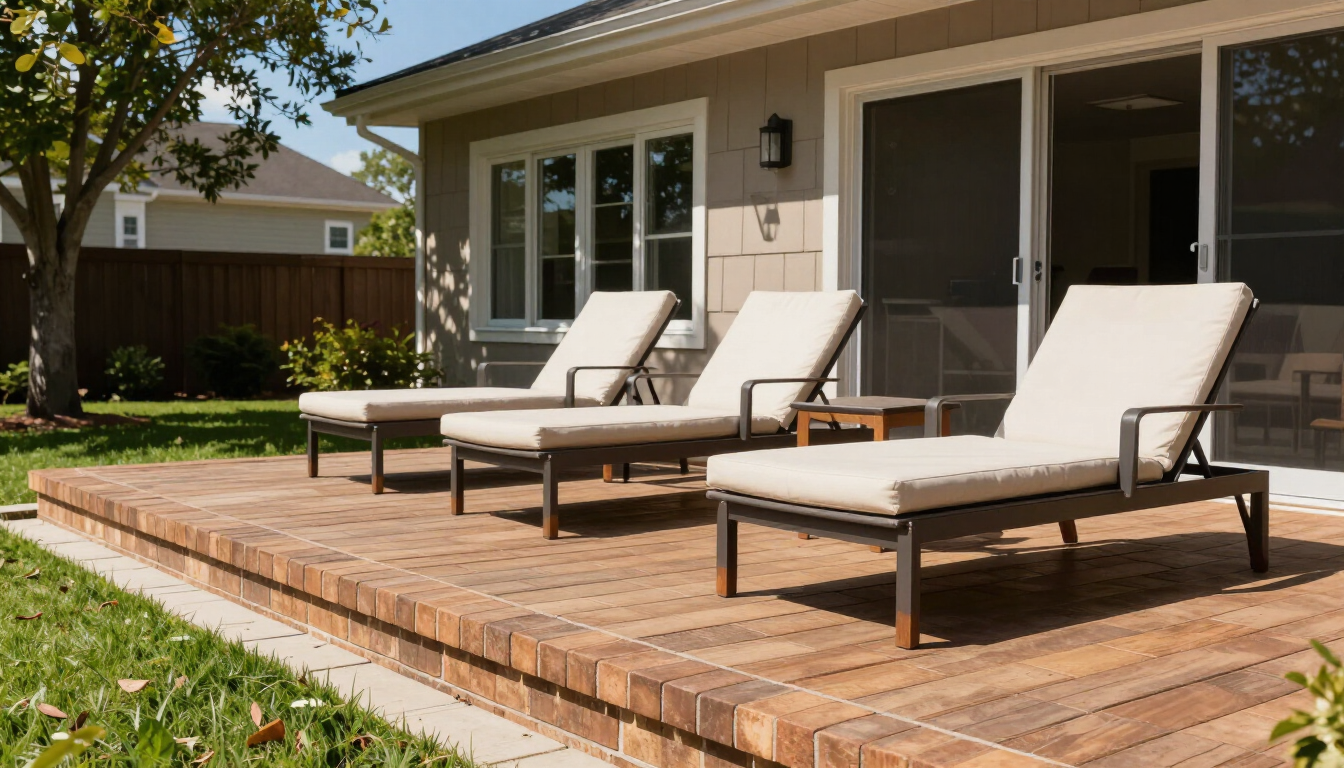
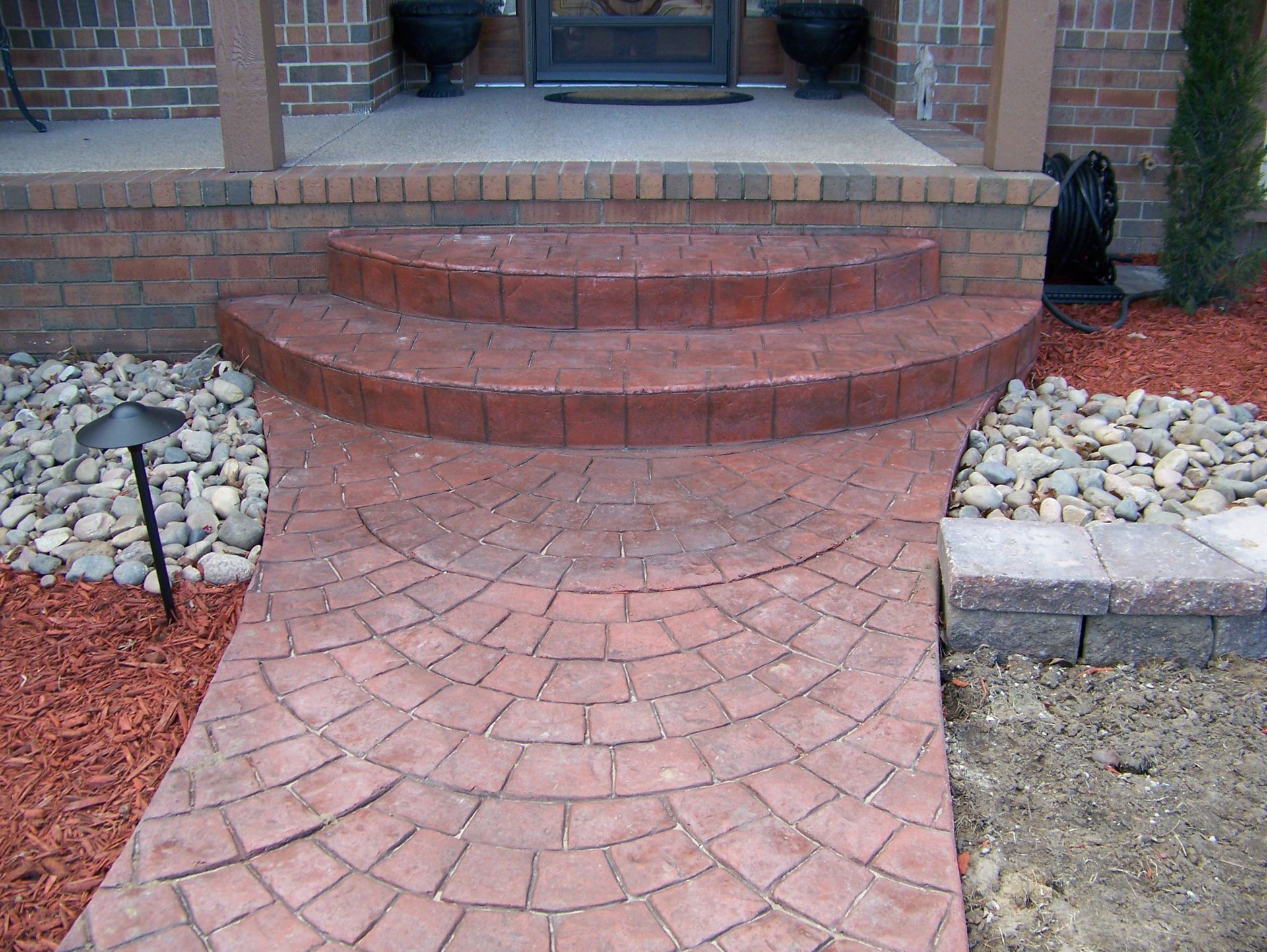
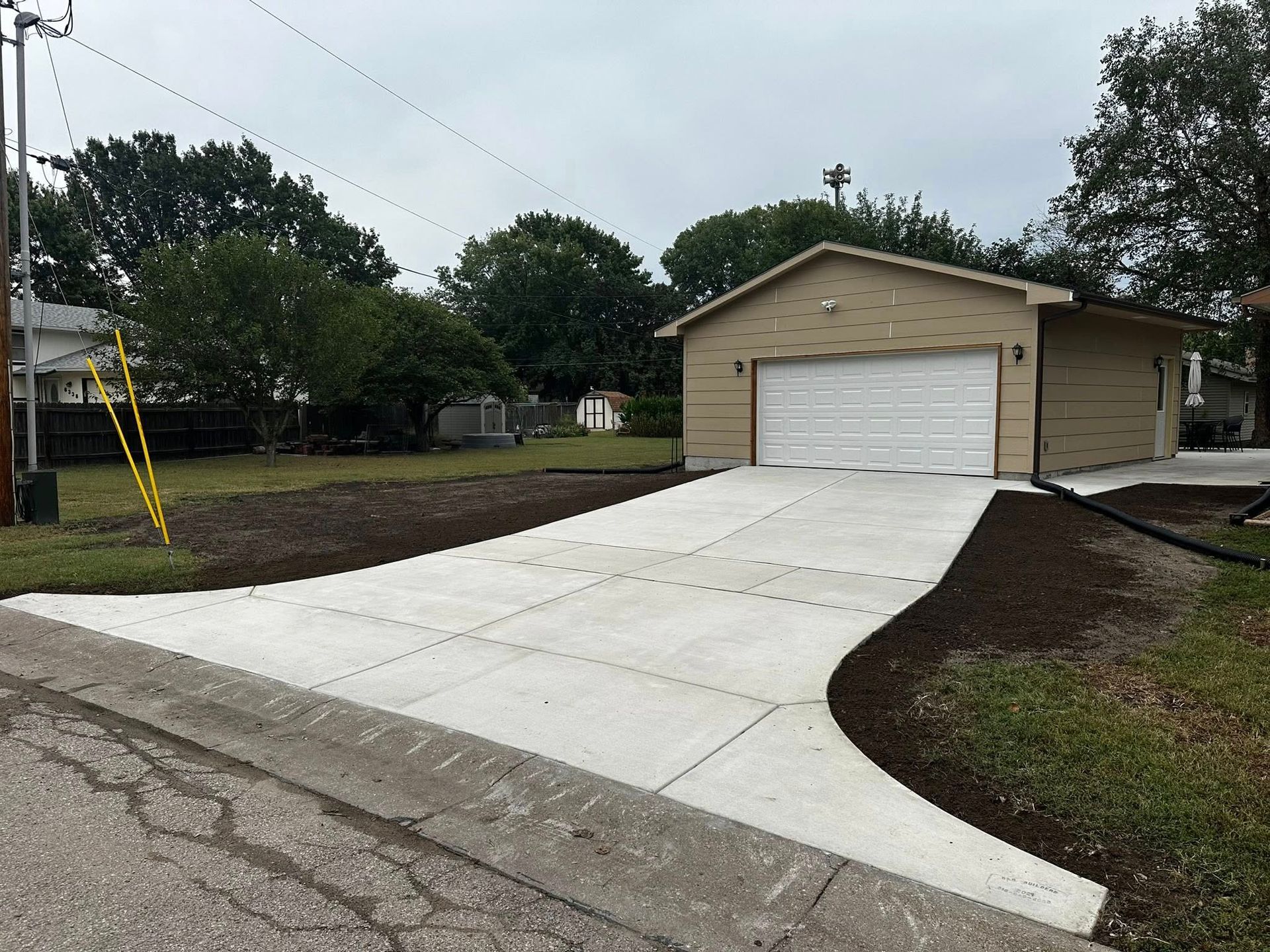
Look: concrete takes color, stamping, and finishes; asphalt is black and stays black.
QUICK START: QUESTIONS TO ASK BEFORE YOU CHOOSE
How long do you plan to stay in the house? What's your all-in budget, not just install day? Do you want to match a stamped patio or keep it plain? Answering those three narrows the choice fast.
Not sure which fits your lot? Get a free on-site estimate. Call 316-945-3232 (Wichita) or 913-453-3232 (Kansas City) and we'll walk your drive with you.
WHY KANSAS WEATHER TIPS THE SCALE
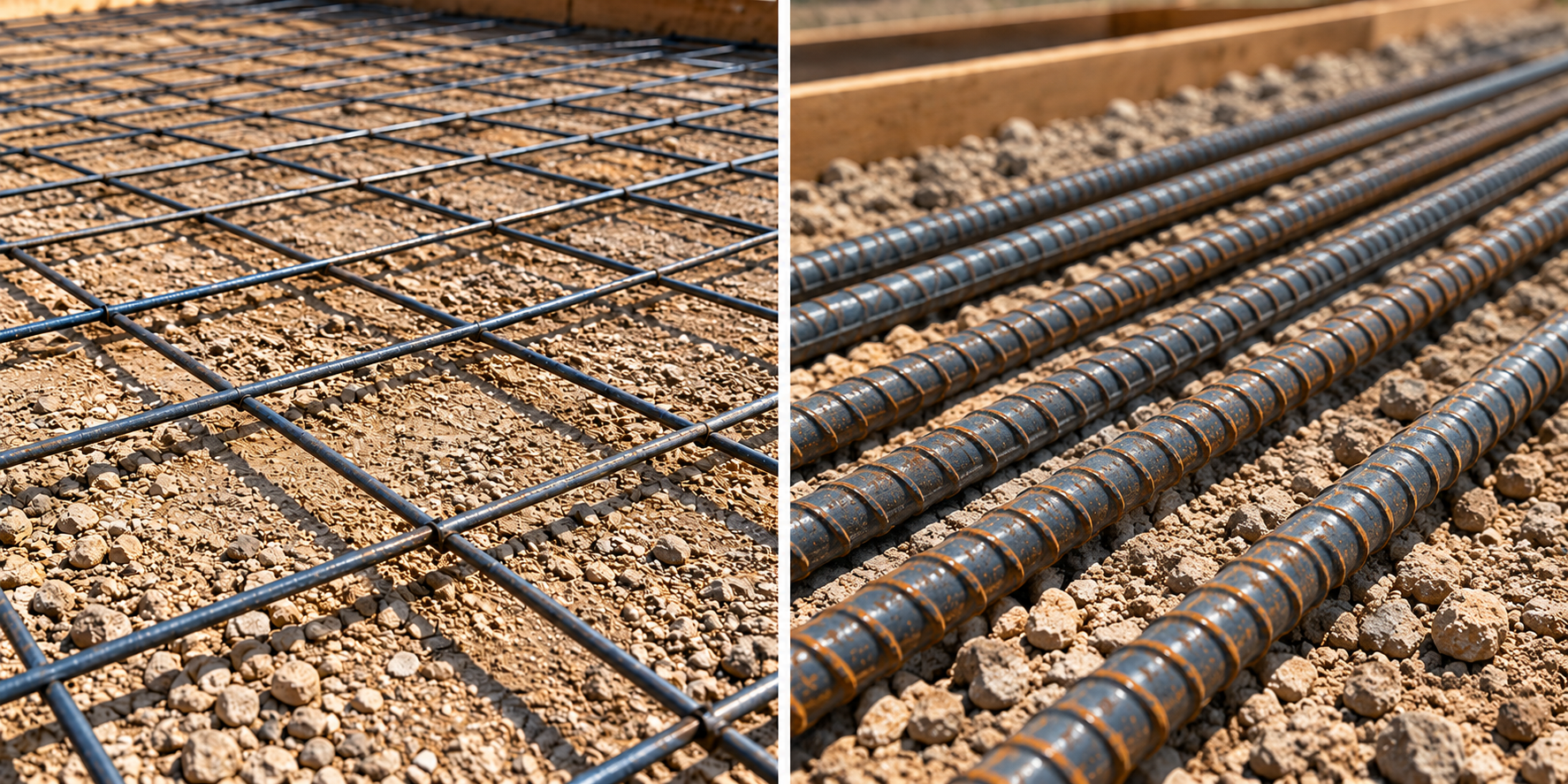
Freeze-thaw and clay are what break driveways here, and the two materials handle them differently. Kansas clay swells when it's wet and shrinks when it's dry, so both surfaces need a solid, well-drained base or they'll crack and heave. Asphalt stays a little flexible, which helps it ride small soil movement, but it softens in our July heat and can rut where tires sit. Concrete is rigid and holds its shape through the heat, but it needs proper control joints and drainage to manage the forces clay puts on it.
QUICK START: SPOT A FAILING DRIVEWAY EARLY
Watch for alligator cracking or soft spots on asphalt, and for heaved slabs, wide cracks, or standing water on concrete. Water pooling anywhere is the first warning that the base is moving. Catch it early and it's a repair, not a replacement.
Already have a drive that's going? Ask us whether it's a resurface or a rebuild before you spend on the wrong fix. Free estimates at bnbbuilders.com.
FROM THE FIELD
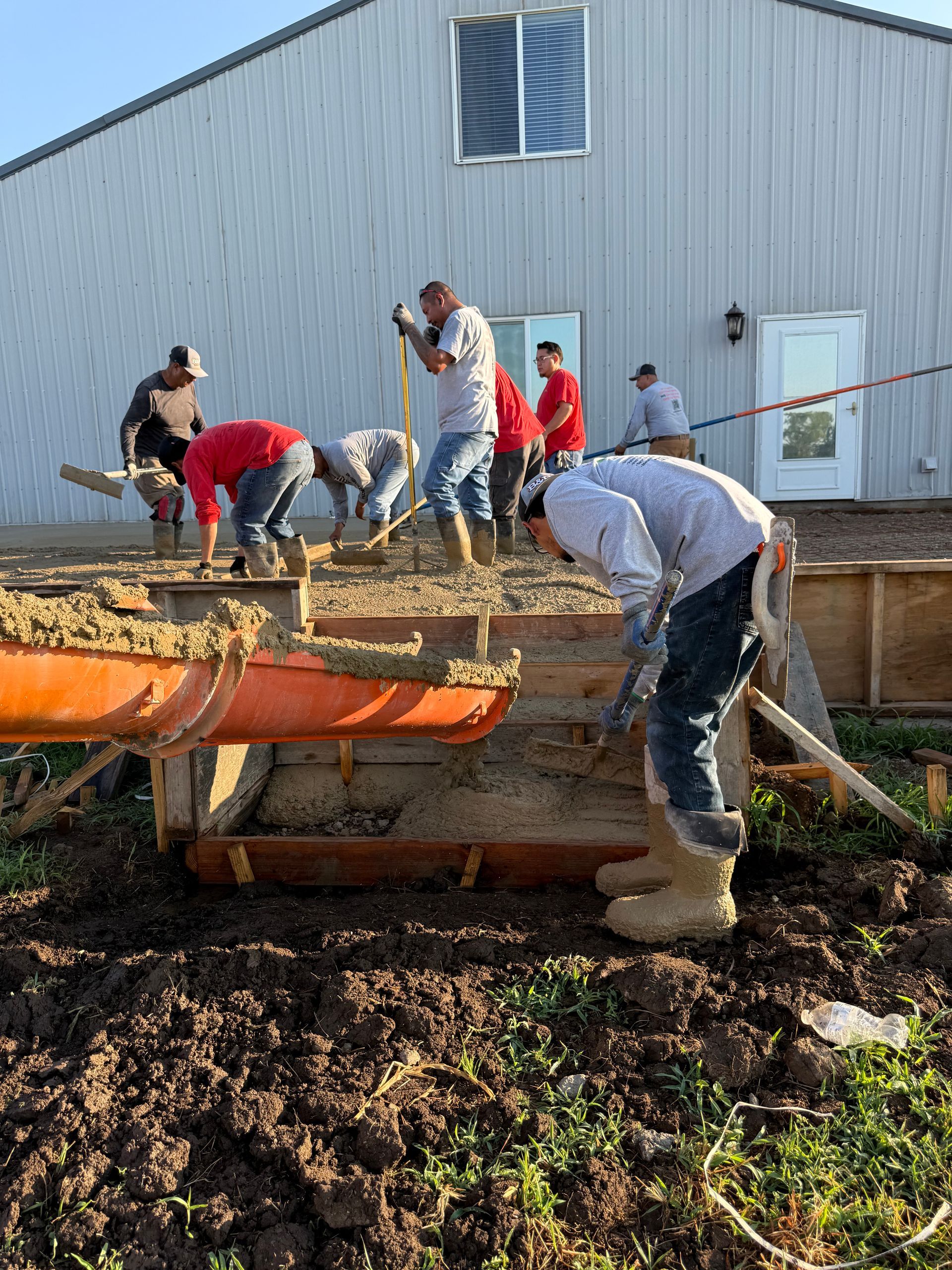
Most of the driveways we tear out didn't fail because of the surface — they failed because of the base under it. We've pulled up asphalt and concrete both, laid straight over soft, un-compacted Kansas clay, and both heaved within a few seasons. That's why on every driveway we pour, we over-excavate soft spots, compact the subgrade in lifts, and grade it to drain before anything goes down. For homeowners who plan to stay put, concrete's longer life usually wins the math; on a shorter budget, asphalt on a proper base is an honest choice too.
PICK THE DRIVEWAY THAT LASTS LONGER
The material matters, but the base and drainage matter more — that's the part that decides whether either surface lasts in Kansas soil. B & B Builders handles both, and we do every step in-house so nothing gets skipped.
P.S. — Planning a new driveway this fall? Call B & B Builders at 316-945-3232 (Wichita) or 913-453-3232 (Kansas City), email office@bnbbuilders.com, or visit bnbbuilders.com for a free estimate.
Written by Stan Stiverson, owner of B & B Builders Inc. — concrete, masonry, decks, and outdoor living built by our own in-house crews across Wichita, Kansas City, and surrounding communities. Free estimates: 316-945-3232 (Wichita) or 913-453-3232 (Kansas City).
Last reviewed: August 2026
Share this article: